Thursday, April 28, 2011

Stormbringer on Why Harry Potter Should Have Carried a 1911

image

Stormbringer is quickly becoming one of my favorite military badass, tactical, gun-nut sites (along with The Things Worth Believing In, and Cop the Truth), and has a great post on why Harry Potter should have carried an M1911.

Worried about its Medusa-gaze? Wear night vision goggles. The image is light-amplified and re-transmitted to your eyes. You aren't looking at it - you're looking at a picture of it.

Imagine how epic the first movie would be if Harry had put a breaching charge on the bathroom wall, flash-banged the hole, and then went in wearing NVGs and a Kevlar-weave stab-vest, carrying a SPAS-12.

Money quote:

Remember: gun-control means that Voldemort wins. God made wizards and God made muggles, but Samuel Colt made them equal.

If, like me, you appreciate this type of humor, then you’ll appreciate this site, too. And you probably understand why my wife rolls her eyes at me when I bring it up!

Technorati Tags: ,,,

Monday, April 25, 2011

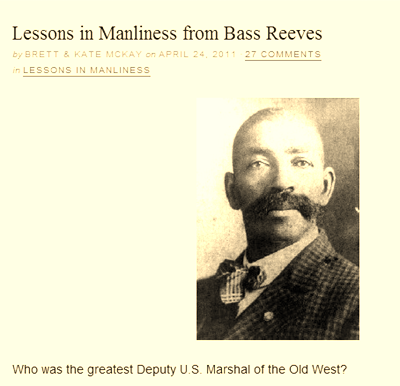
The Greatest Marshall in the Old West–Bass Reeves

image
Fantastic story at The Art of Manliness on someone you may never have heard of: Bass Reeves.
Who was the greatest Deputy U.S. Marshal of the Old West?
Wyatt Earp?
Wild Bill Hickok?

How about Bass Reeves? Bass who?

Friday, April 22, 2011

BJJ Instructor Saves Police Officer During Assault (Video)

Another story of a martial artist being the good guy!Pedro Arrigoni
A San Francisco cop enduring a pummeling from a “crazed” Muni fare evader Wednesday was fortunate that the attack happened outside a martial arts academy.
Hero jiu-jitsu instructor Pedro Arrigoni came to the cop’s rescue, putting the suspect into a choke hold and forcing him into submission at around 1 p.m., police said.
The 24-year-old Portola resident said he had just finished teaching a class at the AB Mixed Martial Arts Academy at 2975 San Bruno Ave. when he saw the suspect had mounted the cop after unleashing a flurry of punches.
Watch the video. [Warning! Graphic content.]

What do you want to get out of your martial arts training?

The benefits of strength in martial arts
Our previous post, Todays Quote: KaratebyJesse, has elicited some excellent comments, and I’d recommend that before reading on, you check out the post at KaratebyJesse.
Back? Great!
The money question,

“What do you want to get out of your martial arts training?”

So the gist of the the matter is that today’s Karate practitioner may be ignoring some of the great benefits of true, old-style training, which consisted of strength, endurance, and body hardening, in addition to what the “traditionalists” like to cling to (provocative, no?), which is kata training.
So the comments from our esteemed, uh, commenters, do have some agreement with the need to supplement their training, but, I actually came down on the side of Noah, who said, “I think that whether supplemental training is important in martial arts depends entirely on what you want to get out of martial arts.” Yes? No?

Wednesday, April 20, 2011

Todays Quote: KaratebyJesse

“One thing that many people of today’s Karate world seem to have grossly misunderstood, and sometimes even forgotten, is the concept of supplementary training.”

Agree? Disagree?

I agree, on first blush. It’s important to note that generalizations are what they are: fuzzy truths – they are right, but not always.

The traditional arts which in which I have trained and taught (Judo, Aikido, TKD, TangSoo, etc.) attract a certain type of person, and that type is usually not into supplementary training like roadwork, weights, kettlebells, you name it. Those who enter sport-based styles like boxing, MMA, wrestling, and BJJ understand that a champion is not made via technique alone. It’s a different demographic.

In fact, one of the primary reasons that sport-based styles breed great fighters is that they fight (applying what they’ve learned) and train like athletes. And that’s where “traditional” martial artists fall down the most, and don’t realize that by supplementing their training, they enhance it in a synergistic manner.

Please yell at me in the comments, or on the TDA Facebook Page.


Like this post? Subscribe to our feed or by email and you won’t miss a thing.
Please interact with us at our TDA Training Facebook page!

All original material is copyright of their respective authors.
All rights reserved. Permission must be obtained before use. Copyright 2011

Tuesday, April 19, 2011

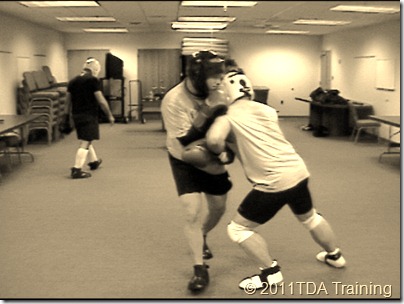
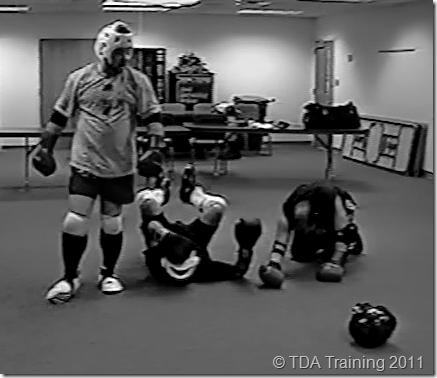
Whoops! Control in Multiple Opponent Sparring

image
One of the strengths of multiple opponent sparring is that it’s less predictable, but that can, predictably, lead to mistakes, and possibly injuries.

Monday, April 18, 2011

Now THIS just makes me mad!

Creeps Robbed a Kid’s Lemonade Stand

Scum! Whoops, I meant, “ethically challenged, underprivileged white youth.”

Sunday, April 17, 2011

For you bloggers that use Gmail, as I do…

This is not strictly martial arts related, but it could be a big help since so many of us use Gmail.
Here are two tools that really make Gmail a powerful tool, and help you keep your inbox clean and get more done. Both are free, and they were a huge help during the recent guest-posting frenzy, as well as on a continual basis for me.
imageActiveInbox is a free add-on for Gmail that will work with IE, Firefox, or Chrome, and it gives you the option to turns each email into a task-with priority, so that you can have an empty inbox and get more done. There is a paid version, but the free is superb, and should work for almost everyone.
imageBoomerang is another great tool if you use Gmail for anything important. You can schedule email to send at a particular time and day, and have it return (boomerang?) back to your inbox if you don’t get a reply, or to remind you to check on something. Never let something important fall through the cracks!
Finally, if you get a lot of junk in your inbox, this is not an add-on, try using Gmail filters. Some things can just be dumped, others you may want to read later, and others just filed so you don’t lose it. Or you may want to Star some important email – try Gmail filters to accomplish all this.
I’d been looking for tools like this for a long time, and hope that they may help you, too.

UPDATE: Boomerang is now for fee, and out of beta, but considering the benefits, may be well worth it! Give it a shot.

Sunday video: Combat Firing with Hand Guns circa 1944

Via Gutterfighting USA, a nice Krav Maga, WWII combatives, and self-defense oriented blog and school. Check them out here.


Like this post? Subscribe to our feed or by email and you won’t miss a thing.

Please interact with us at our TDA Training Facebook page!

All original material is copyright of their respective authors.
All rights reserved. Permission must be obtained before use. Copyright 2011

Saturday, April 16, 2011

Why You Do Not Mess With the Gurkha

Sergeant Dipprasad pun
Sgt. Dipprasad Pun

Watch the video after the jump.

Thursday, April 14, 2011

What Does the 21 Foot Rule for Defending Against a Knife Mean For Non Mil/LE? (Guest post by Low Tech Combat)

This guest post is the third (and last), in the series on the “21-foot rule”, and is authored by Adam of Low Tech Combat. Low Tech is aptly named, and is a great resource for anyone interested in reality-based self-defense, MMA, Filipino martial arts, and combat conditioning. In many ways our subject matter is similar, but LTC has some fascinating posts which are much more in depth on the many subjects. LTC also has some great posts on the very subject we’re speaking of, the lethality of the knife, and what to expect. I will do some posts following this covering those subjects and referencing Low Tech Combat. Enjoy!
Cross-posted here at his site. 
Nathan has asked me to contribute to a series of posts about a video he published on his site which showcases Dan Inosanto. I was only too happy to contribute! It is quite a famous video. In it, Dan shows how a Police officer with a weapon still in its holster, generally requires a surprise knife attacker to be 21 feet away in order to allow enough time and space to recognise what is happening (the person has pulled a knife and is charging), and then make the decision to act, and then draw the weapon and fire at the centre of the attacker. Any less than 21 feet and the officer is generally not able to draw the weapon and fire in time before the knife is inserted into the Police officer's body. I recommend going to watch the 21 foot rule video at Nathan's site before reading on.

Blogs you should read: Tactical Arnis–another great discovery by TDA Training

image
Ok – that’s a really a lie. Worse than the idea that Columbus discovered America, or that Al Gore “invented” the Internet, both of which have some basis in reality, or are arguably true. But, I should deserve some credit for titling the post as if I did, right? No? You’re right. Tactical Arnis is another great new blog, has some excellent contributions to the discussions of martial stuff on the Internet that Gore created (sorry Al).

Only around since February, I have been leery of linking or promoting new blogs until they’re ripe, but I keep seeing things like:

MCMAP – and we’re not talking fast food. This one is a MUST see for anyone who’s got any illusions of being a “warrior” in civilian life, as compared to our troops. Watch the Marines of the Martial Arts Center of Excellence at Quantico humble Dana White and his cadre of UFC cage fighters in their venue. Awesome!

Tactically Speaking: Courage.

Great explanation of OODA Loop and how theories only go so far….

Tactically Speaking: Do you have “Excalibur Syndrome?”

Now, I’m not going to go out and say that this is a great, or even good blog, since there are probably less than a dozen posts, but I want to ask you to check out the excellence so far, and then keep reading to encourage continued posting, ‘cause it looks great so far.

Thanks to TGace of The Things Worth Believing In for making me a believer. I hope to visit their school next time I am in the area.

Wednesday, April 13, 2011

Thoughts on Tueller (guest post by Patrick Parker)

undefined

This, the second in the series on the “21-foot rule” is written by Patrick Parker, of the venerable Mokuren Dojo blog. Patrick and I have enjoyed several years of banter, debate, and sincere mutual admiration since he started writing online, and I’ve grown to look forward to anytime he expresses an opinion, even if I don’t understand it. Sensei Pat runs a Judo and Aikido school in Mississippi, while, in Clark Kent fashion, appearing to the lay person as a physical therapist and PhD with some kids, living a normal life in the suburbs with a long honey-do list. Several times a week, ,however, in the evenings, the suit comes off, the gi and black belt goes on, and he transforms into a 6th-dan in aikido and 5th-dan in judo, both of which outrank and scare me. To preempt any threats or just looks of intimidation for not allowing him to play, I invited him to share his insights from his own context.

Cross-posted here at his site.

I'm not a law enforcement officer.  I don't even play one on TV.  In fact, I didn't even stay at the Holiday Inn Express last night.  But Nathan at TDA Training did ask me to contribute some ideas to a week-long discussion of the famous Tueller Drill.  Check out the video at Nathan's blog, and while you're at it, check out this gruesome example of the 21-foot rule played out in this police reel.

I enjoyed TGace's post about the flaws within the Tueller experiment and I appreciate his assertion that Tueller's results did not validate any sort of claim about the superiority of any particular weapon (a knife) over any other particular weapon (a gun).  I intended to write this post on the idea that what Tueller does demonstrate most effectively is that a gun is not a magical talisman that automatically assures victory - but Paul at Tactical Arnis beat me to that point.  Kudos to both of y'all for excellent, informative articles.

In my opinion, one of the take-away lessons from Tueller (perhaps unintended by the original author) is that a knife in the hand of a person with the right mindset is the most versatile, effective, gruesome, demoralizing weapon invented in the last several thousand years.  Sure, the handgun is (I suppose) the centerpiece of police force projection, but again, the handgun is not a magic talisman.  This point is effectively demonstrated by Tueller.

Also, Tueller's results were intended for police consumption.  Using it to justify anything in the civilian self-defense context is a stretch - particularly because of the simple fact that most civilians will not have access to a handgun most of the time.  But Tueller does illustrate an important point that is one of the centerpieces of our aikido system.  That is...

You can never afford to underestimate the potential of your opponent.

Or, put another way, you have to treat every single training encounter as if your opponent is the most dangerous bad guy imaginable, armed with the most awful tactical advantage imaginable. Or, in shorter form, "You can never tell who you're standing beside."  To us, that means we try to assume that all opponents are armed with a knife.  You have to design your practices around the assumption that your opponent has the potential to kill you if they have the ability to touch you.  That's pretty stringent, and it leads to practices like stab-twice randori, starting already stabbed, and progressive chaos.

As we have done knife randori like this over the years, we have come up with a few pretty reliable pieces of information. First, all of aikido (and probably most all of self-defense) is based on a couple of techniques that we call shomenate (A.K.A. the palm jab to the chin) and aigamaeate (A.K.A. iriminage, a palm jab to the chin done from outside the opponent's arm). The tactical idea behind both of these techniques is the same:

  • get out of the way at least a little bit.
  • get at least a little bit of control of the weapon arm
  • crash into the opponent's center with your whole bodyweight, spearing into his head violently with a stiff-armed palm, locking his neck, and throwing him away.
  • disengage and run away immediately.

All of our randori over the years has verified this basic idea - if you go into a knife encounter with any plan but the above, You're likely to get killed.  But the above plan saves you a remarkable percentage of the time. 

It turns out that all the other stuff in aikido - all the stuff you think of as aikido - the cool wristlocks and the airy breath throws - those are just backup plans.  This basic plan enumerated above makes up easily 80% of aikido, and all the cool stuff fills in around the edges.

And you know what's cool?  Tactical guru, Dave Spaulding agrees with me!

So, in summary of this somewhat rambling, stream of consciousness...

  • Tueller is an interesting experiment that has implications primarily for police, but that us civilians can also learn from.
  • A gun is not a magic talisman that assures victory - particularly if you allow you opponent within a few paces of you.
  • A gun is a powerful and useful weapon, but IMO, a knife is demonstrably more versatile at close range.
  • You can never afford to underestimate your opponent's potential. You must take this idea into every single training encounter.
  • You need some variety and speed and resistance in your knife defense practice - not just the slow zombie attack over and over again.
  • You have to have a fundamental tactical plan that makes up the vast majority of your system that is simple, easy to remember, works under pressure, and involves evasion, automatic control, and immediately-disabling atemiwaza (strikes)

[photo courtesy of Jesse Millan]

____________________

Patrick Parker

www.mokurendojo.com

Tuesday, April 12, 2011

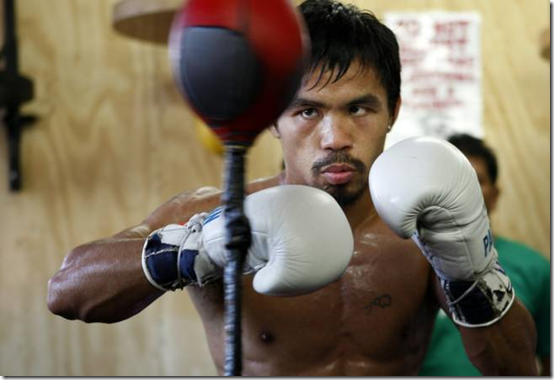
Uses and Benefits of the Double-end Bag To All Martial Arts

Manny Pacquiao training
Image credit: Las Vegas Sun

The Double-End Bag is, and should be a staple of training for all striking arts. At about ten or twelve or so years old I was training in Aikido, Taido, and had quite a bit of Taekwondo training, but when I was at home on my own, I was Bruce Lee, Chuck Norris, Muhammad Ali, and, especially Rocky!

After much begging, and some allowance contributions, I obtained my first double-end bag from Asian World, and added it into my training program with no instruction (I did Asian martial arts, and had nothing on boxing except my books and watching Rocky as often as I could!). I quickly learned that contrary to accepted wisdom, some training bags hit back! I learned a lot, developed some skill, and the bag built upon the arsenal of lethal techniques that I already had. It was good!

However, there are more ways to skin a cat, as they say, and many ways to use this tremendous training tool. Here are a few.

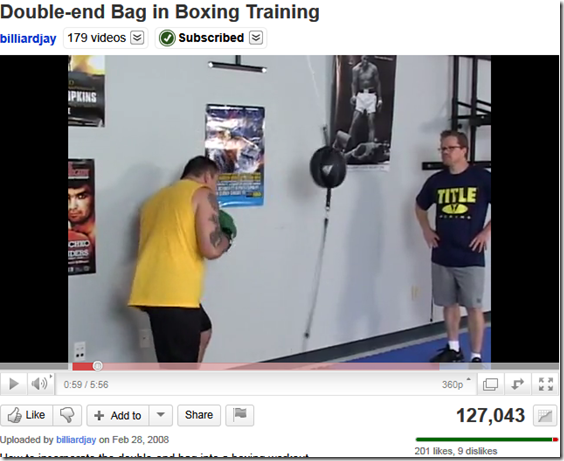
Click the photo to view the video (embedding disabled).
image

Notice Freddie Roach watching? I guess this has the Freddie seal of approval.

This is the boxing approach. Some highlights of my experience with this approach:

  • Use a full, not partial punching motion – don’t “pitty-pat” to get a lot of reps; use the same technique as when you actually punch.
  • These punches will produce a backswing, which is your opportunity to slip to avoid getting hit by the bag, and
  • That’s your opportunity develop combinations because your body position after slipping and punching will lead to a flow of the natural “next” technique. For example, a 1-2 (jab and straight) will lead to slipping a punch (the bag) over your rear shoulder (the one from the straight punch), and naturally position you for a lead uppercut or hook.
  • You’ll get a rhythm in punching and slipping, as you can freelance and slip several times after you’ve thrown a particularly hard punch.
  • Hooks will produce a circular motion which you can use to snap-back and hook with the other hand to reverse the motion.

Next, watch Bob Orlando, notable Kuntao, Pentjak Silat, and FMA instructor demonstrate his approach.

Bob Orlando demonstrates double-end bag

Notice that Orlando is using the bag in a different manner.

  • In the beginning he demonstrates vertical punches (meaning punching with elbow down, and knuckles lined up vertically), and almost in a Wing Chun chain punch or speed bag manner. This can be a really good exercise in that it will develop accuracy and get you used to impact with the punches. Plus it’s great for building endurance in the muscles used for punching.
  • I like how he’s using work gloves – there’s no need to spring for bag gloves with the heavy bag or the timing bag. Had never done that myself, I’ve used 12-18 oz boxing gloves, MMA, bag gloves, or gone au naturel. They all have their advantages. The reason to wear hand protection is that the laces WILL tear up your hands, so be aware.
  • Positioning of the bag with regard to the flexible cord – Orlando mentions putting the flex-cord on the top. That, as he says, will allow different movement dynamics. Try both.

In summary, this tool could be used for many purposes, but will definitely add enjoyment, and (in the beginning) challenge to your training. My only advice is to try to consistently train in a manner with your goals – don’t change your style to try to adapt to hitting a bag. Instead, adapt training equipment to your style and needs.


Like this post? Subscribe to our feed or by email and you won’t miss a thing.
Please interact with us at our TDA Training Facebook page!

All original material is copyright of their respective authors.
All rights reserved. Permission must be obtained before use. Copyright 2011

Monday, April 11, 2011

Of Knives, Guns and 21 feet (guest post by tgace)

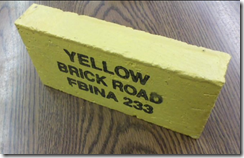
Today’s guest post in our series on the “21-foot rule” is by someone in a fitting position to critique the Tueller training imagetechnique, TGace of The Things Worth Believing In. I have met (though not trained with) this gentleman twice, so far, and have plans to do more in the future. He is currently serving with a mid-sized municipal police department in Vice and Narcotics, and has training and experience in the tactical (SWAT) realm, and law enforcement training. TGace is also a graduate of the prestigious FBI National Academy, the top law enforcement executive training academy in the nation, if not the world. His martial arts experience is quite varied and extensive, but my reason for asking him to participate is due to his current, real-world experience as an officer, and his obsession (my words) with guns and gun training. Enjoy. Cross-posted here at his site.

Martial artist, blogger and personal acquaintance, Nathan Teodoro has posted a video on his blog; TDA Training. The video shows a few minutes of footage from “Surviving Edged Weapons”, which was a film from the late 1980′s that was designed to prepare police officers for dealing with what was thought to have been “the growing threat of ‘knife culture’ in the United States”.

For those of us familiar with this film, Nathan’s video shows the Dan Inosanto training scenarios; the ones where officers get “knifed” by Dan while trying to draw their weapons. The rest is the illustration of the “21 foot rule”, also known as the “Tueller Drill”. Over the years, people (mostly in martial arts circles) have been pointing to this video as the “proof” of the “supremacy of the knife”. I believe that looking at this video, or the “Tueller Drill”, as proof of one weapons superiority over another  is shortsighted and a misunderstanding of Tueller’s original point.

The Tueller Drill

The “Tueller drill” was named after Sgt. Dennis Tueller, Salt Lake City Police. In 1983, he published an article titled “How Close Is Too Close” in SWAT magazine. In this article Tueller discussed the results of a series of tests he had run which showed that most people could, on average, close a distance of 21 feet in about 1.5 seconds. Tueller concluded that a person armed with a knife or club (and I would add ANY object that could be used as a weapon) at this so called “intermediate range” of 21 feet, was a potentially lethal threat. Note Tueller did not say anything about any particular weapon being superior to any other. From a Police perspective he was demonstrating why officers would be justified in displaying and possibly using deadly force against non-firearm threats from distances as great as 21 feet or more. Tueller said in his article:

Having analyzed the problem, the following suggestions come to mind: First, develop and maintain a healthy level of tactical alertness. If you spot the danger signs early enough, you can probably avoid the confrontation altogether. A tactical withdrawal (I hesitate to use the word “retreat”) may be your best bet, unless you’re anxious to get involved in a shooting and the consequent legal hassles which are sure to follow.

Next, if you’re “Early Warning System” tells you that a possible lethal confrontation is imminent, you want to place yourself in the best tactical position available. You should move to cover (if there is any close at hand), draw your weapon, and start to plan your next move.

Why use cover, you may wonder, if your attacker is using only a knife? Because you want to make it hard for him to get to you. Anything between you and your attacker (trash cans, vehicles, furniture, etc.) that slows him down buys you more time to make the appropriate decisions, and, if it becomes necessary, more time to place your shots.

I suggest you draw your weapon as soon as the danger clearly exists. There is no point in waiting until the last possible second to play “Quick-Draw McGraw” if you recognize the threat early on. Also, the sight of your “Equalizer” may be sufficient to terminate the action then and there.

The purpose of the pistol is to stop fights, and whether it does so by dropping a thug in his tracks, or by causing him to turn tail and run, your goal is accomplished, is it not?

At this point it might be advisable to issue a verbal challenge such as, “Stop”‘, “Don’t move”, or “Drop your weapon!” It may work, and even if it doesn’t you’ll be developing your legal case for self-defense by showing that you did everything you could to prevent a shooting. If all goes according to plan, the odds are that by now you will no longer have a problem, your attacker having remembered he had a more pressing engagement elsewhere.

Tueller says nothing about any weapon being inferior/superior, the necessity of being trained in knife disarms, or argues the “inherent deadliness of the blade”; it was all about range awareness, tactical awareness and the use of force. What this discovery tell me is that officers should be tactically analyzing the situation they are approaching at all times, they should be looking for non-verbal threat cues, they should be watching an opponents hands, they should use objects as cover when possible and they should never just walk up to a subject as a matter of habit. Police Officers should always maintain a healthy “reactionary gap” between themselves and others but Police Officers cannot be conducting business from 21′, behind cover with a weapon drawn either. “Yes I will get your cat out of the tree ma’am, but first interlock your fingers on top of your head and spread your feet apart!” Unlike non-sworn personnel, sometimes we can’t walk away from any potential threat, it’s our duty to deal with it. What is ultimately most important is adhering to tactically sound officer safety techniques at all times.

The Worst Case Scenario

Tueller said this in his article too :

Sometime, of course, despite your best efforts, you could find you are suddenly, at close quarters, the intended victim of some lunatic slasher. If you are an expert in one of the many martial arts, you may opt to go at it hand-to-hand, and if you are in this category you do not need advice from me on how to do it. So, we’ll get back to the use of the handgun for solving the problem. What it all comes down to now is your ability to smoothly and quickly draw your pistol and hit your adversary, and do it all reflexively. And the only way to develop these reflexes is through consistent, repetitive practice, practice, practice.

In the clip from Surviving Edged Weapons where Dan Inosanto attacks the cops, the lesson is stated as “you have to use empty hand techniques”. Well if you walk right up to a person acting suspiciously in an empty warehouse instead of issuing commands from range and the guy attacks you with a knife, than yes, I guess you are in deep caca and depending on your gun alone may not be the best idea. However, I think that the ultimate lesson for officers here shouldn’t be “learn martial arts“, as beneficial as that would indeed be, it should be “use better tactics“. But to be fair to the officers in the video, I don’t know exactly how the scenario was presented to them. The narrator says it was framed as “respond to suspicious circumstances in a warehouse at night”. If it was “It’s 1AM, the business is closed, and you find a broken lock…” these Coppers screwed up. If it was “It looks like it may be the business owner”, that’s a different story and they were set-up for the confrontation by the creators. I also wonder if there were any subjects who “won” the scenario that didn’t make the film?

When it comes to the mechanics of close range fighting, I agree that backpedaling and focusing on trying to draw your pistol in the face of a knife attack is not a great idea, but I think that telling officers that they should be focusing on disarming an attacker or staying entirely H2H is a mistake as well. Knife defenses and disarms are a “break glass in the event of emergency” situation even for highly trained martial artists, let alone an Officer who will probably be practicing such techniques far less often. What would be best to learn from this video is to not be “in the hole” in the first place. If the officer has no choice, than this video is a good lesson in the need to combine empty hand techniques with basic tactics like lateral movement and CQB oriented shooting styles, which are essential for “in the hole” confrontations versus “quick draw” style techniques.

A commenter on another post in my blog gives great advice on how to deal with this sort of confrontation if you screw up bad enough or are just plain unlucky enough to be in one :

1. You MUST solve the positional problem BEFORE you try to acquire your firearm and engage the threat. This means you may have to move off the line of threat, or go hands on with the threat until you can improve your position sufficiently to ensure that you have the time and space to draw and deliver deadly force.

2. You must RETAIN your weapon. SouthNarc teaches shooting from a high “two” position, with the pistol tucked in close to the body and the firing thumb indexed along the pectoral muscle. Support side arm in a horizontal or vertical “elbow shield”, utilizing the bone structure to provide sufficient space between you and your threat so you can work the trigger and not get foul the slide or get it forced out of battery.

3. It’s going to be hard, fast, and ugly.

4. If you stand still and try to draw your gun and pull the trigger while a big ape is stacking your sh**, you will not prevail.

5. Movement, strikes, and working to the flank, getting dominant position, and THEN lighting up the bad guy is the goal.

Good stuff.

What It All Means

The Tueller Drill, while a useful tool, seems to have become a set piece exercise with a tendency to be overblown by people who missed Tueller’s point. I believe that the main revelation of the Tueller Drill is the power of initiative and INTENT. In the classic “Knife vs. Gun Tueller Drill” the knifer knows he is going to attack and when. The other person stands there…holstered…and waits. There is no “scenario”, no back-story of why you are in contact with this person in the first place. It never takes into consideration obstacles between opponents, it never considers the officer taking the initiative and drawing, giving commands and or preempting your opponent. The drill is pure physics. A person can cover this distance and strike a person in this given time”.

On the street this boils down to basic OODA . In the classic Tueller Drill the knife wielder is already inside the defenders “OODA loop”, the knifer gets to both DECIDE and ACT before the defender can process the situation. If you allow a little “real world” into this exercise, and the defender in the Tueller drill knows that the knifer is coming for him (which he does = Observe) he should “cheat”. He should run..place an obstacle between him and the BG (Orient) and start issuing commands and/or start shooting before the knifer even thinks to move (Decide/Act). I have always wanted to be asked to participate in a “Tueller Drill” and wait to be told “You stand here. He has a knife and when he moves you react”. I’d ask “he has a knife?” and when told yes draw down, place an obstacle between us and give commands. I know that I would be ignoring the intent of the drill by doing that. The intent being to simply make you aware of the “reaction gap” and the realities of edged weapons, but the Tueller Drill is ultimately an example of math more than it is an example of “combative truth”.

IMO, who decides to attack, who is first aware of the threat and who has a weapon in hand is more important than which weapon is “superior” in this sort of scenario. If you have an enemy who is within 21′ with ANY WEAPON and he gets to make the first move, while you wait to respond…you are in big trouble, be that a knife, a gun, a bottle or a roadside rock.

Stay Alert, Stay Aware, Stay Alive.

If you enjoyed this post, please check out The Things Worth Believing In site, and connect with the author at his Facebook page and on Twitter. And if you’re a criminal in his area, steer clear (sorry TGace, couldn’t help it!).

Stay tuned for the rest of the series, including posts by Pat from Mokuren Dojo, and Adam from Low Tech Combat, later this week!
Sunday, April 10, 2011

Sensei Strange and Wim DeMeere on the 21-Foot Rule

image
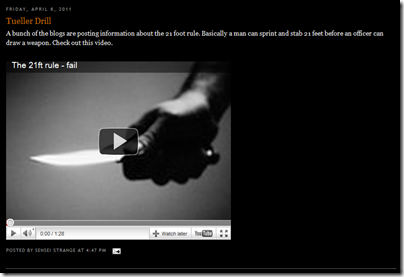
Sensei Strange at Dragons Orb has a great video and some excellent comments in response to my post, “Distance and Awareness-Blade and Gun (Video).”. Click the photo to check it out.

image
Wim responded with this post almost as soon as our original post hit the ‘Net.

Look for a great post tomorrow from TGace of The Things Worth Believing In on the same subject!

Thanks to Patrick from Mokuren Dojo for the heads up about Strange’s post.

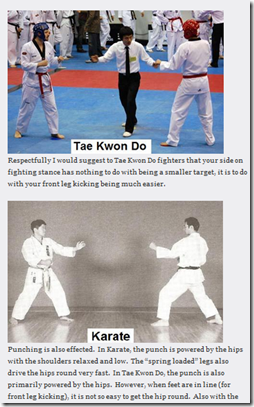
The Difference Between Karate & Tae Kwon Do

image

Bunkai Jutsu posts What's The Difference Between Karate & Tae Kwon Do? Huh? Are they different?

Tae Kwon Do (or Taekwondo, or Taekwon-do) is a relatively new style.
There are those who claim a lineage of ancient arts in Korea, but, the essence of the martial art (which is not really a single art, but a collection of styles), is, as the author states, based on Shotokan.
Now, this gets really confusing, because, as some of my fellow MA bloggers have noted, there's a diversity of thought and expression of TKD throughout the USA, and the world. But as to it's origins, he's right.
The thrust (yes, I meant that) of the post is on the differences, and he does a fine job on that count. Read more, and yell at me in the comments.

Friday, April 08, 2011

Distance and Awareness-Blade and Gun (Video)

Watch the video in full – does it change your awareness of anything?

This begins a guest post series with three of the best writers on martial subject matter in the business: TGace of The Things Worth Believing In, Patrick Parker of Mokuren Dojo, and Adam of Low Tech Combat. Over the next few days they will share their views on the drill and what it means to them in training, or what it can teach the rest of us.


Like this post? Subscribe to our feed or by email and you won’t miss a thing.
Please interact with us at our TDA Training Facebook page!

All original material is copyright of their respective authors.
All rights reserved. Permission must be obtained before use. Copyright 2011

Thursday, April 07, 2011

Where You Are

image

Awright. It’s late, I’m tired, and I just wanted to add some snarky commentary on where the top cities for TDA Training readers are located. As long as you don’t go visit other cities before reading TDA Training, these stats will be somewhat accurate.

First of all, I love New York! Greatest city in the world! New Yorkers visit the most, and read the most pages, and are the coolest people in the world! At least for now.

Second comment, I am impressed with the Aussies (is that OK to call you that?) – look at all the Australian cities in the top 24 (a tribute to the TV show): Sydney, Melbourne, Brisbane, Perth, and Austin. Ok, Austin is in Texas, and I was just testing our readers’ geographic knowledge.

Dublin? And you may have seen that I don’t advocate headbutts, so I’m not sure how that happened. Don’t tell them, please.

And who lives in (not set)? Where is (not set)?

And London’s pretty cool, too.

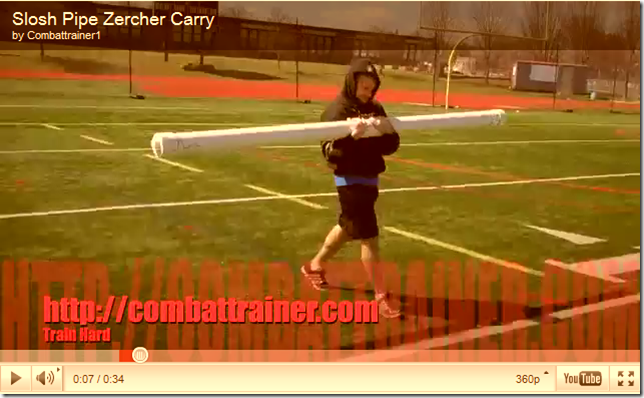
For Crazy Training Ideas–CombatTrainer.com

CombatTrainer.com Slosh Pipe Carries

I never cease to be amazed at the innovative ideas that Rob at Combat Trainer comes up with – check out his latest - Slosh Pipe Carries, or click the video to head over and watch.

Can you picture me shaking my head in wonderment?

I am…

Wednesday, April 06, 2011

The lighter side of martial arts–MAS

image

Martial Arts Spectrum has a nice light post of funny martial arts fail videos ALL of which are new to me – check em out, they’ll make your day go by faster.

Tuesday, April 05, 2011

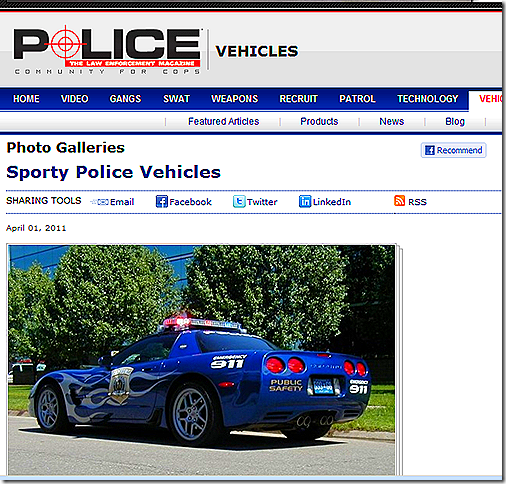
Sporty Police Vehicles

Sporty Police Vehicles

If you liked our previous posts on police cars, past and present, you might like Police Magazine’s gallery of Sporty Police Vehicles. Check it out!

You may also like:

Reader Poll: Best Ever American Police Vehicle?
Do not run! - the new Carbon police car
Showdown - The New Pursuit Vehicles Arrive for Testing
2011 Dodge Charger Pursuit
New Chevy Caprice PPV for 2011

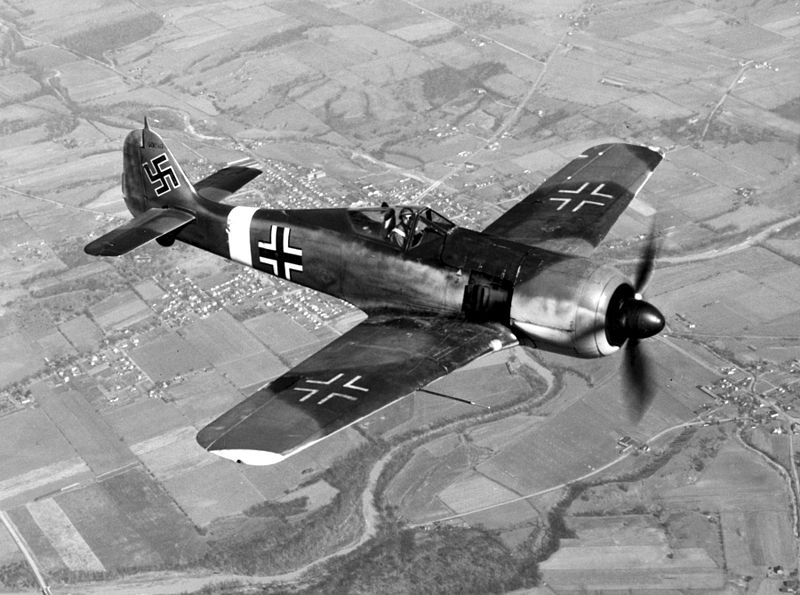
Luftwaffe Fw 190 Recovered Intact!

File:Focke-Wulf Fw 190 050602-F-1234P-005.jpg
Photo credit: Wikipedia

Here’s a fascinating Blackfive post on a Focke-Wulf Fw 190 Würger discovered intact in a Russian forest in 1989, and then, later, restored to flying condition in the U.S.

image

The original discovery lead to the plan being moved to England, and then it’s eventual restoration in California.

Per the post, a fascinating discovery was made that probably explained why the 190 went down:

A technician from Vintage Wings took apart the engine to find a dirt clod in an oil line, which had pinched off the lubrication.  Consequently, an internal shaft overheated and failed, disabling the fuel and oil pumps, which led the engine to fail.

How did that dirt clod get in there?  It was a new engine, just installed.  BMW did not do major engine maintenance in the field.  When an engine needed repair they removed the entire "power egg," the engine on its mount, and shipped it back to the factory in Germany.  Some of the work was performed by slave labor.  One theory is that a slave laborer sabotaged the engine, stuffing some dirt downstream from the oil filter, so that the engine only worked for a few minutes.

Paul Rätz made it only a few miles before he was captured and not shot on the spot.  He was instead taken prisoner where he remained for sixteen years, released by the Soviets in 1959.  Only ten percent of the German prisoners taken captive by the Soviets survived, so Rätz was double lucky.  His opinion may differ.  Unfortunately, Rätz died in 1989, having never learned his airplane had been found.  Perhaps it was better for him never to know he spent sixteen years in a Soviet prison because his plane had been sabotaged, that a tiny little dirt clod had determined his fate.  However, his family learned that his fighter had been recovered.  They have the clock.

Apparently, it’s part of the Flying Heritage Collection and is now ready to fly, in original condition. Read the whole thing!

Friday, April 01, 2011

Dynamic Views of TDA Training

image

Blogger has created five exciting new ways of viewing TDA Training! Please try them all. And while using them, make sure to use your arrow keys in all directions, and to page up and down, and use your mouse scroll wheel (if you’ve got one). Amazing!

Just type: http://tdatraining.blogspot.com/view/ into your browser, and try out all five. Via Blogger’s help page, “In all views, search is available in the upper right hand corner. Clicking on the ">" arrow in the very top left of the header bar will slide the header bar across and allow you to choose different views for the current blog as well as type in a new blog URL. There is also a feedback link for each view.”

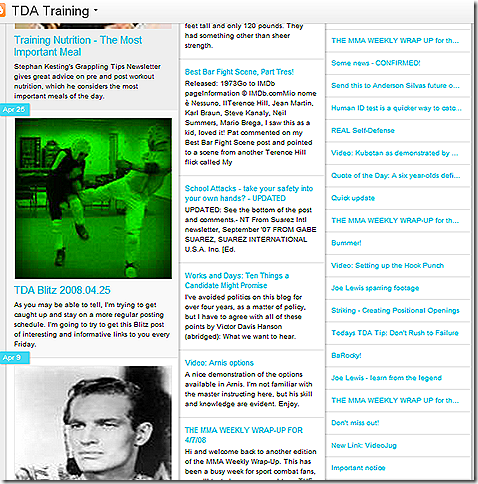
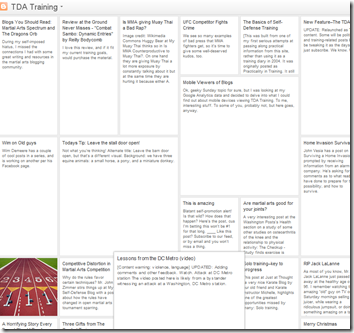
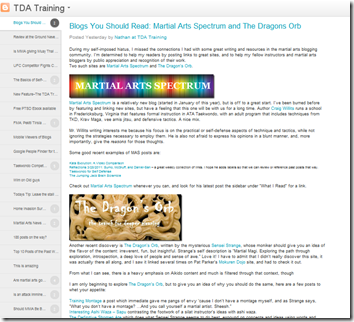
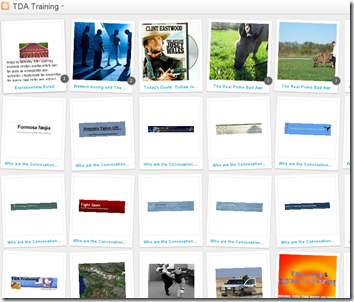
Here are screenshots of each view:

TDA Training Flipcard View
Flipcard

TDA Training Mosaic View
Mosaic

TDA Training Sidebar View
Sidebar

TDA Training Snapshot View
Snapshot

TDA Training Timeslide View
Timeslide

I’d love to get your feedback on any and all of these. What’s your favorite, and why?