If you, like I, have conducted scores of demonstrations, you can relate to parts and pieces of this demonstration gone wrong. I am in awe, though at the skill, persistence, and "ability." See Worst Martial Arts Demo Ever?

Sunday, August 04, 2013
Worst Demonstration Ever?

Tuesday, July 23, 2013
Is Self-Defense A Right?
In the light of many things that have happened in the past couple of years, I ask this question. Is self-defense a right? Since we are all either martial artists, warriors, or have an interest in the same, let's answer and discuss this critical question. Consider this an open thread.
Let me add to the question:
____
Like this post? Subscribe to our feed or by email and you won’t miss a thing.=
All original material is copyright of their respective authors.
All rights reserved. Permission must be obtained before use. Copyright 2013
Let me add to the question:
- Since the beginning of understanding, and the basis for communication is the definition of terms, what is self-defense?
- What is a right?
Please feel free to opine, and do your best to give reasons for your opinions. All non-SPAM comments will be approved. I will be responding at the end of every day, Eastern time.
____
Like this post? Subscribe to our feed or by email and you won’t miss a thing.=
All original material is copyright of their respective authors.
All rights reserved. Permission must be obtained before use. Copyright 2013
Wednesday, July 17, 2013
Hero Teens Finds Abducted Girl
You may have heard this story of an abducted child being rescued by two teens. It's still worth watching this video interview of one of them.
Takeaways:
____
Like this post? Subscribe to our feed or by email and you won’t miss a thing.
All original material is copyright of their respective authors.
All rights reserved. Permission must be obtained before use. Copyright 2013
Takeaways:
- These kids weren't afraid to get involved - many, if not most adults do not.
- They listened to their intuition. Noticing a suspicious vehicle, and looking for the girl.
- These seem like great kids, regardless of the rescue; at the beginning of the video, Temar mentions that they were helping an old lady move a couch. He also mentions that a whole bunch of their friends were looking.Outstanding!
As we often see, heroism is ordinary people stepping up for others when the circumstances present themselves. To me, that's extraordinary. God bless these young heroes.
____
Like this post? Subscribe to our feed or by email and you won’t miss a thing.
All original material is copyright of their respective authors.
All rights reserved. Permission must be obtained before use. Copyright 2013
Tuesday, July 09, 2013
Saturday, July 06, 2013

Tuesday, June 25, 2013
Need to get more buff
I am at a law enforcement conference representing my company, and being around all these young guns is making me have to suck in the gut. Not cool!
Wednesday, June 19, 2013
What metro area has the most martial arts schools?
I'm voting for Boston. I have been working in the Boston area for a few days, and have never seen so many storefront studios. Amazing!
How to Be A Good Victim
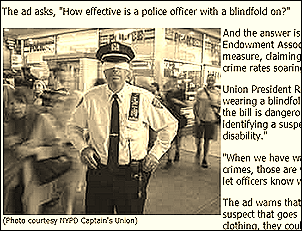 Finishing up some reading that I will be posting on soon, but I came across this in my work feed:
NYPD unions say bill would blindfold officers, "It will ban cops from identifying a suspect's age, gender, color or disability" — or risk being sued for profiling"
I have to say that this is disappointing on many levels, even the idea that someone should withhold information that could lead to the arrest of an assailant or criminal due to accusations of racism or, when that charge is leveled at law enforcement, "profiling."
My take:
Every victim or witness should make every effort to give as complete and accurate a description as possible of everything that was involved in the commission of a crime. If it's early evening, and you see three guys in light blue shirts and faded jeans breaking into a business across the street with a white Ford F-150 parked out back, describe exactly what you saw. Those are the facts! If you happen to notice that all three are Hispanic males wearing light blue shirts with faded jeans, one is approximately 5-foot, four inches, the other two about average height, and one had a red bandana in his back pocket, and there was a white F-150 running with NJ plate XXXXXX, then that's what you should report.
In a previous life, I did some part-time police dispatching (rather amateurishly, in fact), and was trained to get from victims, then provide to my officers all descriptors that could identify a perpetrator, so I did. If you don't the chances of them getting the wrong guy (whoops, I just profiled!) go way up, and it could be you that becomes a victim, and the real criminal may never get caught.
So how do you be a good victim?
What should you provide if you witness, or are the victim of a crime? Everything. Some suggestions:
First of all, when you call 9-1-1 (in the US), make sure you give you number, in case you get disconnected, and your location. Not every dispatch center can obtain that information all of the time - systems fail, and can be inaccurate.
Of the subject (as accurate as you can, and tell the authorities if it's a guess or estimate):
- Sex
- Race/ethnicity
- Age
- Height
- Weight
- Build
- Hair color (or baldness)
- Facial hair
- Any distinguishing scars, marks, or tattoos
- Head covering/hat
- Shirt type and color
- Pants type and color
- Shoes
- Anything else that could narrow it down, like missing teeth/eyes, limps, language, etc.
Of the situation and environment:
- Where did the crime occur?
- What happened? Be succinct, but complete.
- Is the danger still present? Is there a person there with a knife/gun or other weapon? Is the fight still going on?
- How many people are involved?
- What time did it happen?
- Which way did they go?
- What kind of vehicle were they driving? Did you get a plate number?
Please don't think I am making light of, or minimizing racial profiling. I am not. All factors must be included in reporting a crime, both to protect the innocent, and to catch criminals.
Disagree? Agree? Please tell me what you think, and why in the comments.
____
Like this post? Subscribe to our feed or by email and you won’t miss a thing.
All original material is copyright of their respective authors.
All rights reserved. Permission must be obtained before use. Copyright 2013
Tuesday, June 18, 2013
Must read: How to Protect Yourself from Date Rape Drugs
Defend University has a great post on protecting yourself from date rape drugs.
____
Like this post? Subscribe to our feed or by email and you won’t miss a thing.
All original material is copyright of their respective authors.
All rights reserved. Permission must be obtained before use. Copyright 2013
Read the rest, including practical steps here.They are odorless, tasteless and they are intended to incapacitate you while producing enough amnesia that you’ll never remember him attacking you.They are called “date rape drugs” and can be put into drinks or food. And they can kill you.Before you think this can never happen to you, read about this real case of one of our friends being date rape drugged. Leslie in this story still does not know specifically what she was drugged with, but a few of the most common ones are Rohypnol, GHB and Ketamine. There are a number of different street names they are known by, but all three have similar effects — they impair you to the point that you are unable to refuse sex or defend yourself.
____
Like this post? Subscribe to our feed or by email and you won’t miss a thing.
All original material is copyright of their respective authors.
All rights reserved. Permission must be obtained before use. Copyright 2013
Subscribe to:
Posts (Atom)