These have been around for a while, but they’re still funny!
A sample:
Head over to Sifu Craig Taylor’s site for the rest!
Technorati Tags: martial arts humor
These have been around for a while, but they’re still funny!
A sample:
Head over to Sifu Craig Taylor’s site for the rest!

A great find over at The Things Worth Believing In blog. Click the pic to watch it there!

I think my favorite “war” in MMA has to be this one – Don Frye versus Yoshihiro Takayama at PRIDE 21. Watch!
This is one of those bouts that makes your draw jop! See, I can’t even spell after watching this – jaw drop!
Frye and Takayama went straight at each other, toe to toe, and never quit. I sincerely believe that neither one would have quit if it came down to it.
One tender moment, if there can be said to be one here, was when Frye looked down on his vanquished foe after securing the TKO victory and patted his former enemy with respect. I think the war was over between them at that moment.
What is your all-time favorite MMA war?
… to stuff moving around and all. I am doing a (very) minor redesign of the site. It will stop when I am done. Until then, I make no promises as to what will happen.
Thanks,
Nathan
[Repost from August 24, 2007 – Nathan]


 I just met Tim Hull, The Strength Doctor in Ohio while I was on travel. An interesting fellow, I’ve been corresponding on Twitter with Tim, and was eager to meet when I realized I would be in his area.
My impressions?
Tim is a genuine, caring professional who practices what he preaches. Tim Hull is a physical therapist by trade, and has been in the practice of health care for many years. He is also in great shape and has worked with a wide array of patients, from elderly to athletes, and his knowledge base has grown as a result.
My impression was reinforced by Tim’s experiences in sports: basketball, football, and wrestling, if I remember correctly. He’s putting all of that knowledge and experience to use in his new E-book (see his site) “Functional Correction. [The link to the book appears to be bad at this time. I will update it when it’s back up]
I would recommend you check it out, and if you’re on Twitter, follow @thull.

Jiu-Jitsu Sensei Lori O’Connell’s strategy on “What to Do When Your Bell Gets Rung.”
As Chris and I sparred and increased the intensity, we each managed to take a couple of solid hits. The solid hit I took to the head in the form of a left hook that really hit home and rang my bell. I actually saw stars briefly. My response, as I've trained myself to do, was to let loose my own strikes, and to keep at it until I had regained my composure.
She explains her reasoning for that response “is to keep from being overwhelmed.” A great idea in that almost no one is effective blocking, and even less are effective defending strikes when impaired by the loss of balance and coordination that comes from taking a hard shot to the head.
This strategy can be applicable in almost any self defense situation where you are being overwhelmed, or you are smaller or weaker that your attacker – go on the attack!
Great post, Sensei!
For more information:
I had the privilege of attending a pot-luck dinner this last weekend hosted by my son’s Scout troop, during which, one of the boys demonstrated three different knife defense techniques.
The attacks were:
If you’ve served in the military, you’ve seen the defenses performed, or learned them yourself in basic training. They are very basic, stiff, and unrealistic, but you had to perform it by rote. I’ve learned and taught them myself, and proper performance of the techniques depends on a cooperative and reliably predictable partner feeding you the attacks.
By contrast, please take a look at the video below from the program, “Fight Quest,” where the hosts learned some techniques in a short time and have to compete or demonstrate them against exponents of the style or system that they’ve learned. In this case, Filipino martial arts.
Hat tip to Tan Dao for the video. Follow him on Twitter, too.
The first fight on this video is of one of our hosts, the white dude squaring off versus a Filipino representing their Marine Corps. As you can see, it’s not even close. The knives are coated with dye or ink to simulate the damage that would be caused by cuts or stabs, and it' isn’t pretty.
The problem with standard knife defense techniques taught all over the world, including in military service and police academy class environments is that people don’t attack that way. Only an extremely unskilled attacker will attack in those fully-committed stabs or slashes. Same goes for displaying the weapon; even a moderately skilled knife attacker will not display the weapon, but instead, use it before you knew it was there.
What’s the solution? How can you defend against something you can’t see, or of which you aren’t aware? What are the differences between what you need to know as a civilian, law enforcement officer, or soldier?
Our recommendations:
I think what you will find is that the knife almost always will cut you, regardless of your skill, especially if you try to defend it in the manner that you’ve been taught in the past.
Finally, seek qualified instruction through seminars, videos, and tapes, and drill, drill, drill. Once you become aware of the danger and iniquitousness of knives in most areas, you’ll learn to carry one yourself, and watch the hands of anyone who makes your “spidey-sense” go off.
Stay safe out there!
Photo source: US Army FM 3-25.150 (FM 21-150) p8-21
For more information:
In response to a question from one of my Twitter friends, I’d like to help define what “checking is for you. And, rather than reinvent the wheel, here is a repost from an authoritative source.- Nathan
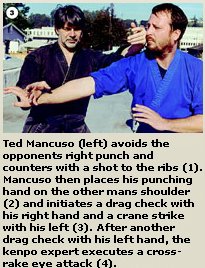 Very good Kenpo article on checking by Ted Mancuso. Key points:
 Mike and I were working on this the other day. I'd like to learn more, but this is a very effective tactic for me."...checking is the countering of a movement before it becomes an identifiable strike. In other words, a check stops an assailant before he can even start his attack." [Emphasis mine- Nathan]
"Don't withdraw your non-punching hand. Keep it in position to check your opponents arm as you strike back. You may sacrifice the extra power of the withdrawal, but that's a small price to pay for not being hit."
The following are four of the most effective ways kenpo teaches students to execute a checking-hands maneuver:
Active Check: It involves simply laying your checking hand over your opponents limb. For instance, he throws a right punch, and you block it while checking his left punch which he had probably planned as his next attack with your right hand. You can then simultaneously deliver a left strike to his face.
Position Check: The opponent throws a right punch, and you block it on the inside using your right hand. You simultaneously raise your left hand into a cover hand that is positioned near your right shoulder. If he attempts to throw a high left punch, your check can intercept it and allow yourself a bit of time to duck. If he attempts a low left shot to your ribs, your right (anchored) elbow is already in position to close that line of approach.
Drag or Friction Check: Don't misinterpret checks as just frozen hand motions, for they can be very lively. For instance, you toss a right hand at your opponent, and he blocks it with his left hand. Before he even thinks about it, you wipe down the length of his arm while driving forward with a left palm strike. You have used the friction check to prevent his strike and aid your counter.
Pinning Check: Your opponent grabs your lapels with both hands. Rather than try to disengage from him, you cover and pin his arms with your left hand while you strike his solar plexus. The pinning check ensures that his limbs stay where they are, at least for a while, and it can be a perfect lead-in for a follow-up technique.
If not, you’re missing something special. I’ve enjoyed interacting with readers and new martial arts friends there. What I appreciate is the “live” aspects of the Q&A interaction there. Ask a question, get an answer – NOW.
Sound good, go to http://twitter.com/tdatraining to hook up there.
Some of our best MA blogging friends are there, too. Come on, give it a try.

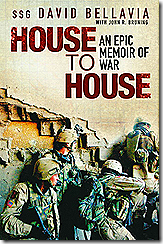
Ever wonder what it’s really like, in the heat of a firefight, where the next moment could be your last, where time slows to a crawl, your senses are heightened, and you become less sensitive to other things at the same time? This is such an account.
My recollection is that there was a push to take Fallujah early on, then we let political considerations interfere, and the effort was halted. Later, the battle was on. Flyers and leaflets were dropped on the city leading up to the attack, warning citizens to leave. The enemy stronghold was surrounded, and those leaving were searched and released. Those who stayed? Considered the enemy, and were to be subdued one way or another.
Bellavia’s book details how the physical structure of the Iraqi homes made almost every one like a little fortress with a stone wall and building structures. Each one had to be cleared before moving on, and where their Bradley Fighting Vehicles and M1 tanks could not go, men had to move in on foot, into the traps laid by other men who were waiting, and willing to die. No, hoping to die. Watch.
For more information:
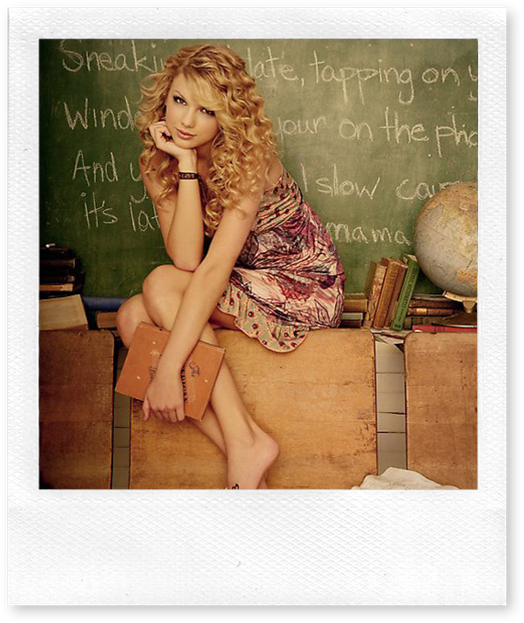
About 9 months ago I said to my son's friends that Taylor Swift couldn't sing, and, you know what, they DIDN'T care! I have no idea why!
Seriously, she's young, beautiful, blonde, and kids love her. The boys want to uh, be her boyfriend, and the girls want to be her friend.
I like her too. Before you accuse me of being a perv, hear me out:
She's not sleazy, her songs (those that I've heard) have reasonably positive messages, and I don't think she's in a gang.
When I said that she couldn't sing live, but sounded OK with the modern recording enhancements, they were OK with that. And I am too.
A nice find at MMAConvert, a one-kick knockout with a spinning head kick.
There’s been a debate for as long as martial artists get together and trash talk or speculate, as to whether high kicks are effective or a waste of time, or just dangerous to use. My take has been that we need to learn as much as we can, and prepare for as much as we can.
The facts are that this move is rarely seen in MMA, or fights, because it’s a classic, risky, low-percentage technique. The payoff can be high, but so can the costs if you miss. Should you use it? Not if it’s expected.
One final point, the reason it worked was because it was set up with what appears to be a leg kick feint, which drew the guard of the opponent down, creating a perfect head kick opening. You’d be best to plan to emulate that idea – set up your surprise with a good lead, fake, or feint.
What do you think? What are some other examples of high-payoff, but high-risk moves for self-defense or sport?
